


Next Generation Laser Vision Correction
What are the benefits of SILK™ vs LASIK?
Laser Vision Correction History

Surgical reshaping of the cornea was pioneered in the 1960s, using surgical blades. Although the procedure was groundbreaking at that time, it was invasive and lacked precision.¹ Most vision correction surgeries now use laser-based technologies and are precise, minimally invasive and may be painless. The lasers used are based on the excimer laser, the discovery of which in the 1970s revolutionised vision correction surgeries.
What happens in laser vision correction?
The goal of laser vision correction is to reshape the cornea, which aims to correct refractive error. Different types of laser eye surgery achieve this through various techniques.

LASIK
Lasers have been in use since the early 2000s to create a flap in the cornea. In these procedures, a different laser is then used to reshape the cornea and correct the refractive error.2 LASIK remains one of the most popular types of laser eye surgery worldwide.
SILK™
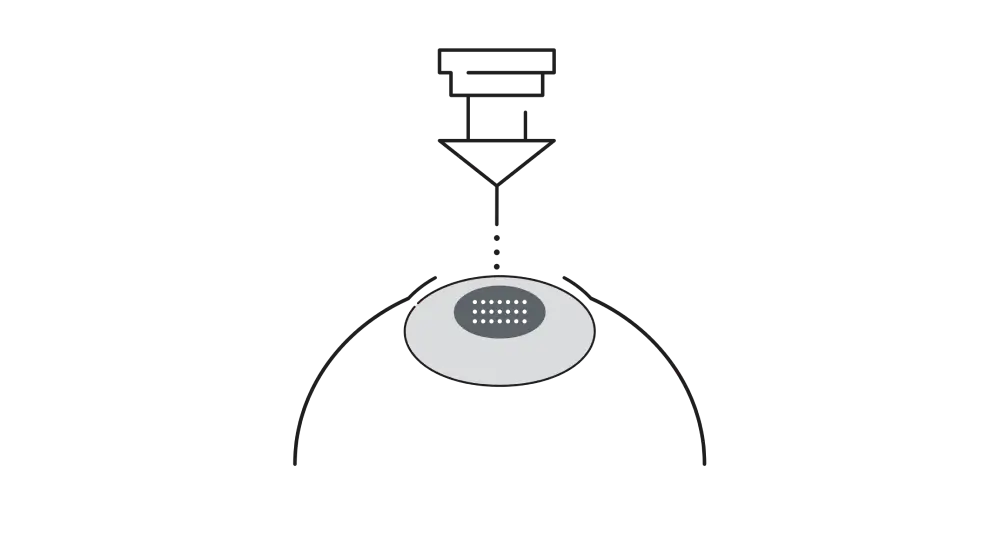
More recent technologies are less invasive and do not need a flap to be created.3 One laser is used in these procedures, which creates a microscopic incision in the cornea, reshapes it and corrects the refractive error. Learn more about how SILK™ technology works.
Although surgeries to correct refractive errors have been available for decades, lenticule removal technologies represent significant innovation in laser vision correction.³
Patient education video
Refractive errors can be corrected for most people, using surgical or non-surgical methods.¹
Watch the video to see what happens in the next generation of lenticule Laser Vision Correction procedure.
Smooth Incision Lenticular Keratomileusis (SILK™) is a laser eye surgery treatment that offers vision correction for people with myopia with and without astigmatism.*
*The SILK procedure is performed using ELITA™ femtosecond laser system (ELITA™).
Frequently Asked Questions
What types of laser eye surgery are available?
The main types include LASIK and SILK™. Each has different techniques, recovery times, and suitability criteria.
How do I know if I'm suitable for laser eye surgery?
Candidates typically require stable vision, adequate corneal thickness, and no contraindicated health conditions.3,4 A comprehensive eye examination with your eye doctor will determine your eligibility.
What results can I expect from laser vision correction?
Most patients achieve vision improvement. With SILK™, most patients achieve clearer vision within six months.5 Learn about benefits and what to expect.
THIS PRODUCT IS NOT AVAILABLE FOR PURCHASE BY THE GENERAL PUBLIC
SILK™ is a surgical treatment and as with any medical procedure, risks and potential complications may occur.
Consult your eye doctor to see if laser vision correction with SILK™ is suitable for you.
Find an ELITA™ clinic location
Select your state to search for a clinic location where you can receive SILK™ using ELITA™:
*SILK™ is a surgical treatment and as with any medical procedure, risks and potential complications may occur. Consult your eye doctor to see if laser vision correction with SILK™ is suitable for you.
References
- Wellington Eye Centre. The Evolution of Laser Eye Surgery. Available at: https://wefixeyes.co.nz/articles/the-evolution-of-laser-eye-surgery/. Accessed 12 December 2025.
- All About Vision. LASIK Surgey. Available at: https://www.allaboutvision.com/treatments-and-surgery/vision-surgery/lasik/lasik-surgery/. Accessed 12 December 2025.
- Eye Mantra Hospital. SILK vs SMILE vs LASIK. Available at: https://eyemantra.in/lasik/silk-vs-smile-vs-lasik/. Accessed 12 December 2025.
- PlanketLasik, Centre For Sight. What Makes SILK Surgery the Smoothest Laser Vision Correction Option? Available at: https://planetlasik.com/blog/what-makes-silk-surgery-the-smoothest-laser-vision-correction-option. Accessed 12 December 2025.
- Sachdev MS, Shetty R, Khamar P, et al. Safety and Effectiveness of Smooth Incision Lenticular Keratomileusis (SILK^TM) Using the ELITA^(TM) Femtosecond Laser System for Correction of Myopic and Astigmatic Refractive Errors. Clin Ophthalmol. 2023;17:3761-3773. Published 2023 Dec 8. doi:10.2147/OPTH.S432459